Cal Schaeffer - WW2 Veterans - Mickey Strand - Veterans Series

Mickey Strand - Veterans Series View More Photos Skip to Main Content

World War 2

Click on Veteran's photo to see their Ledgend. These American Heros served during the World War 2.

FREQUENTLY ASKED QUESTIONS

Where can I donate?

I have created a way to accept donations to grow the project, use the WWII Veterans Portrait Series
Please email

Where are you located?

I live in the San Diego area but have traveled to many locations to interview and photograph Veterans.


How Long is an Appointment?

Appointments usually last an hour. But please free up time for Mickey to set up lights and cameras, hold the interview, and take some still photographers for in the project.

Do you accept reservations?

Yes is the simple answer to the question. Each appointment is set up as an individual session. Group sessions have been set up when I visited a senior living facility or many of the California Veterans Homes.
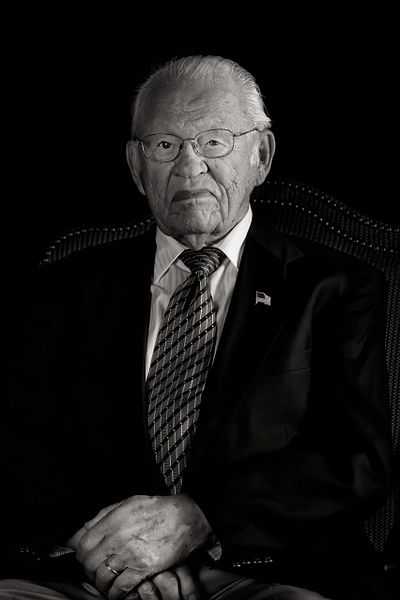
United States Air Air Corps Sergeant World War II Cal Schaeffer was born in August 1925 and served in the United States Army Air Corps during World War II from January 44 to June 46, rising to the rank of Sergeant. Cal attended Basic Training and Advanced Individual Training to become a Radar Technician. Here, he learned to service the radar, Liaison Radio, and command radio systems on the Boeing B-17 Flying Fortress. Cal was assigned to the 2nd Bombardment Group (Heavy) and continued operations as part of the Fifteenth Air Force. Cal and the squadron were stationed outside of Foggia, Italy, as part of the Naples-Foggia Campaign. Engaged primarily in long-range bombardment of strategic targets in Germany, in what would become Amendola Air Base. Cal remembers occasionally flying in the B-17s for maintenance check flights, but was not assigned as an aircrew. The 2nd Bomber Squadron was posted at an airstrip in the middle of a farmer’s field outside of town, and the crew lived in tents for the first year until the local town cleared out some buildings for the American GIs. Cal and the squadron engaged in missions in support of the advance and eventual attacks on Berlin, which pushed the maximum range of a B-17's fuel and crew, including shuttle coming raids like Operation Frantic. The 20th Squadron received two Distinguished Unit Citations for missions during the campaign at Steyr, Austria, and the following day, on a mission to attack aircraft factories at Regensburg, Germany. Cal recalled that most of these missions went well, but occasionally crews were forced to land at bases in Northern Italy on longer missions, after running out of fuel. Sargent Cal Schaeffer returned to the states and was honorably discharged from the Army in June of 1946 after the end of the War.
mickey,strand,photograph,nikon,Z7ii,California,San,Diego,portrait,VPS,WW2
Cal Schaeffer - WW2 Veterans - Mickey Strand - Veterans Series
United States Air Air Corps Sergeant World War II Cal Schaeffer was born in August 1925 and served in the United States Army Air Corps during World War II from January 44 to June 46, rising to the rank of Sergeant. Cal attended Basic Training and Advanced Individual Training to become a Radar Technician. Here, he learned to service the radar, Liaison Radio, and command radio systems on the Boeing B-17 Flying Fortress. Cal was assigned to the 2nd Bombardment Group (Heavy) and continued operations as part of the Fifteenth Air Force. Cal and the squadron were stationed outside of Foggia, Italy, as part of the Naples-Foggia Campaign. Engaged primarily in long-range bombardment of strategic targets in Germany, in what would become Amendola Air Base. Cal remembers occasionally flying in the B-17s for maintenance check flights, but was not assigned as an aircrew. The 2nd Bomber Squadron was posted at an airstrip in the middle of a farmer’s field outside of town, and the crew lived in tents for the first year until the local town cleared out some buildings for the American GIs. Cal and the squadron engaged in missions in support of the advance and eventual attacks on Berlin, which pushed the maximum range of a B-17's fuel and crew, including shuttle coming raids like Operation Frantic. The 20th Squadron received two Distinguished Unit Citations for missions during the campaign at Steyr, Austria, and the following day, on a mission to attack aircraft factories at Regensburg, Germany. Cal recalled that most of these missions went well, but occasionally crews were forced to land at bases in Northern Italy on longer missions, after running out of fuel. Sargent Cal Schaeffer returned to the states and was honorably discharged from the Army in June of 1946 after the end of the War.